
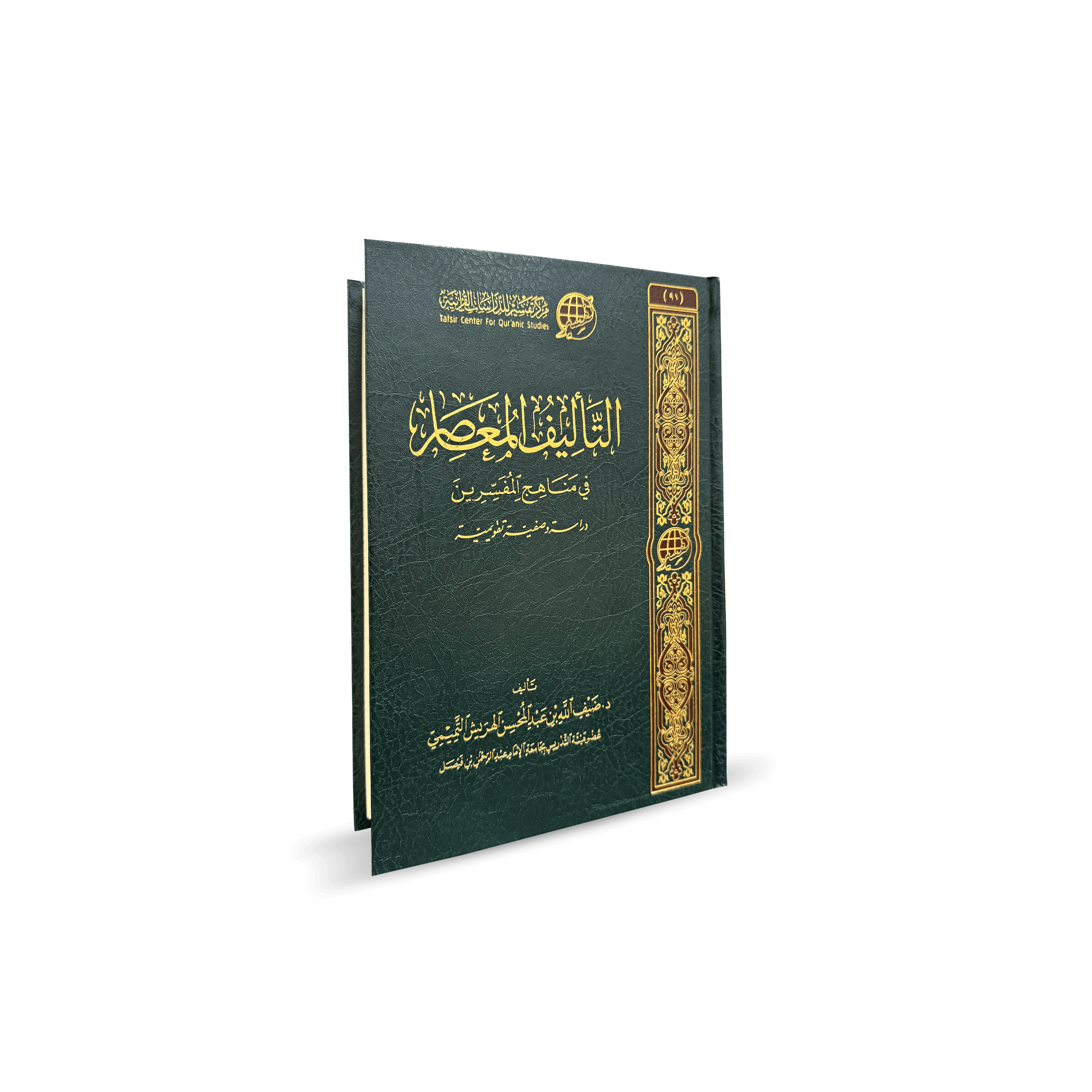
إصدار مركز تفسير — رقم (91)التأليف المعاصر في مناهج المفسرين
دراسة وصفية تقويمية — تتبُّع وتحليل وموازنة للمؤلفات المعاصرة
عدد الصفحات
832 صفحة
المجلدات
مجلد واحد
المقاس
17 × 24 سم
الطبعة
الأولى
سنة الطبع
1446هـ — 2025م
تأليف
د. ضيف الله بن عبدالمحسن التميمي
عضو هيئة التدريس بجامعة الإمام عبدالرحمن بن فيصل
📖
عن الكتاب
لما كثرت العناية بالتأليف في مناهج المفسرين في العصر الحديث، رأى المؤلّفُ من المفيد تتبُّع أبرز المؤلفات المعاصرة في مناهج المفسرين التي لم تتقيد بمفسر أو إقليم، ودراستها دراسة تحليلية موازنة، تكشف عن المنهجية التي سارت عليها هذه المؤلفات، من خلال دراسة تاريخ التأليف المعاصر في مناهج المفسرين، وأطواره، واتجاهاته، وسماته، وعلاقاته، ومن خلال الموازنة بين المؤلفات في مكونات منهج المفسّر، وفي مسالك استخلاص المناهج، ثم دراسة المؤلفات من ناحية تأسيس معالم الكتابة في مناهج المفسرين، ومظاهر التقليد فيها، ثم بحث آفاق التطوير للتأليف في مناهج المفسرين، وتحليل عام لأبرز الكتب المؤلفة فيه.
★
يتميز الكتاب بعدة مزايا، منها
1
درَس الكتاب تاريخ التأليف المعاصر في مناهج المفسرين وأطواره ومراحله، وقارنَ بين الجهود المعاصرة التي كان لها فضل السَّبق في بناء وتأسيس علم مناهج المفسّرين.
2
أثبتَ بعض الجهود المعاصرة في بناء وتأسيس علم مناهج المفسرين، والتي تقدمت على كتاب "التفسير والمفسرون" للذهبي، وتتابعَت المؤلّفات المعاصرة في مناهج المفسرين، وغيرها على إغفالها.
3
قارنَ بين اتجاهات التأليف المعاصر في مناهج المفسرين، وسماته، وعلاقاته.
4
تتبّعَ كافة تعريفات "مناهج المفسرين" وحَلّلها؛ مبيّنًا ما في بعضها من ملاحظات.
5
تتبّع النشأة التاريخية لمصطلح "مناهج المفسرين" واعتماده اسمًا لهذا العلم.
6
ناقش مفهوم مناهج المفسرين، وصورته في التأليف المعاصر من خلال التعاريف، ومن خلال موضوعاته في المؤلفات بإحصاء متكامل لها.
7
حلّلَ مكونات منهج المفسر ومرتكزاته في التأليف المعاصر، من خلال إحصاء متكامل، وتوصّل إلى المنهج الأصوب في دراسة منهج المفسّر.
8
حلّل مسالك استخلاص منهج المفسر في التأليف المعاصر (المسالك المشتركة بين المؤلفات والمسالك التي تمايزت بها بعض المؤلفات) وكيفيات توظيفها، وحالها بين التكاملية والانتقائية، وذلك من خلال إحصاء متكامل.
9
وازَنَ بين المؤلفات في تأسيس معالم الكتابة في مناهج المفسرين.
10
بيّن مظاهر التقليد في التأليف المعاصر في مناهج المفسرين.
11
عرض جملة من آفاق التطوير للتأليف في مناهج المفسرين.
12
أفرد دراسة مفصلة لأبرز الكتب المؤلفة في مناهج المفسرين (٢٦ مؤلَّفًا)، من خلال العناصر الآتية: ترجمة المؤلِّف، ومعلومات نشر الكتاب، وموضوعات الكتاب، وطريقة المؤلِّف في تناول مناهج المفسرين، ومحاسن الكتاب، والمآخذ على الكتاب.